
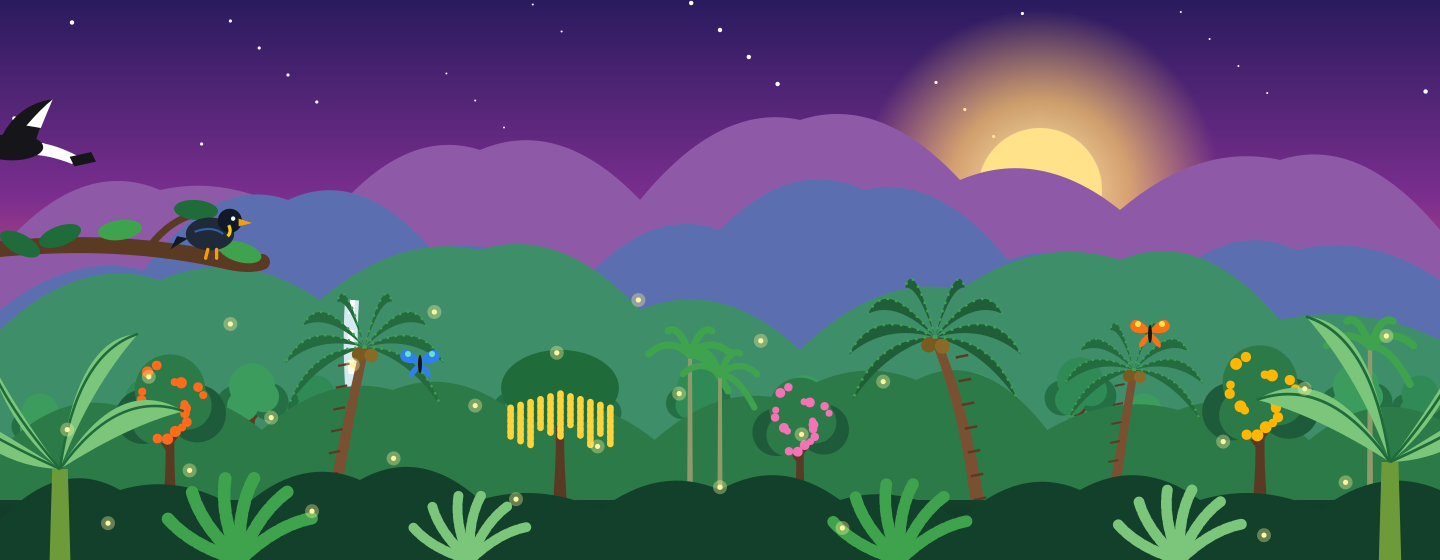
Stages in the forest
Along the Western Ghats, where the forest runs down to the sea, villages have told their oldest stories all night long by lamplight: with painted faces, towering crowns, drums and dance. Meet seven of these folk arts, from Kerala, Karnataka and Maharashtra, and learn a few words from each.
Kerala
Kathakali
കഥകളി · kathakaLi
Kerala · Malayalam
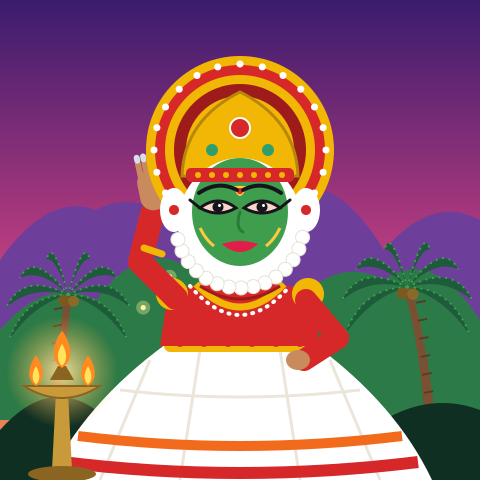
A story-play from Kerala, about four hundred years old. The actors never speak: they tell tales from the Ramayana and the Mahabharata with their hands, their faces and above all their eyes, while singers sing the verses and the chenda drum thunders.
Did you know?
• Its name joins katha, a story, and kaLi, a play.
• Hand gestures, called mudras, make a whole language: there are 24 basic ones.
• A green face (pachcha) marks a noble hero. The white frame round it is made of rice paste, and the make-up takes hours.
• Plays once ran from dusk to dawn, lit by a great brass lamp at the front of the stage.
Words from the stage
കഥ
katha · story
കളി
kaLi · play
പച്ച
pachcha · green
വിളക്ക്
viLakku · lamp
Theyyam
തെയ്യം · theyyam
North Kerala · Malayalam
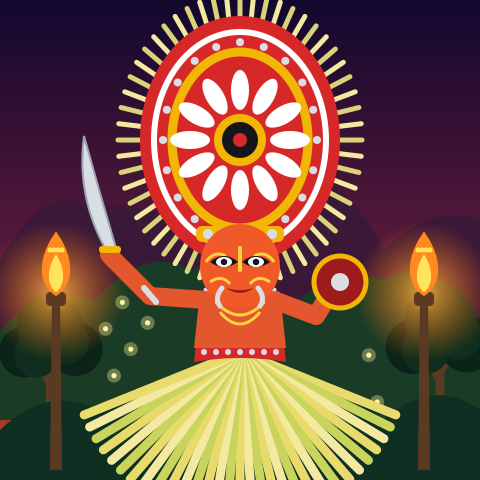
In the villages of Kannur and Kasaragod, the performer of Theyyam is believed to become a god for the night. In sacred groves and shrines, under towering headdresses and by the light of torches, the Theyyam dances, blesses the people and listens to their troubles.
Did you know?
• There are hundreds of Theyyams, each a different god, hero or ancestor, with its own face painting and costume.
• The headdresses, some taller than a house, are made of bamboo, areca sheaths and tender coconut leaves.
• Faces are painted with natural colours: rice paste, turmeric and lime.
• The season runs from about October to May, and the art is passed down in families.
Words from the stage
ദൈവം
daivam · god
കാവ്
kaavu · sacred grove
തീ
thee · fire
ചെണ്ട
cheNTa · drum
Pulikali
പുലിക്കളി · pulikkaLi
Thrissur, Kerala · Malayalam
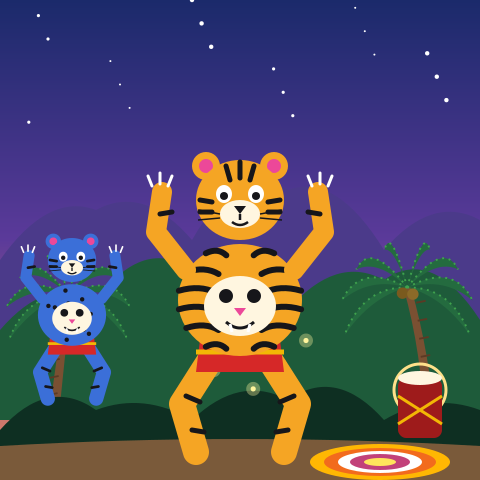
On the fourth day of Onam, the streets of Thrissur fill with tigers. Hundreds of dancers, painted from head to toe in yellow and black stripes, with a tiger's face painted on the belly and a mask on the head, dance to the beat of drums while the crowds cheer.
Did you know?
• Its name joins puli, a tiger, and kaLi, a play: the tiger play.
• Painting one dancer takes hours, and the paint is made fresh with powders mixed in oil.
• Big bellies are prized: they make the best painted tiger faces, and they wobble as the dancers move.
• Alongside the tigers come leopards, spotted cheetahs and even black and blue tigers.
Words from the stage
പുലി
puli · tiger
കളി
kaLi · play
ഓണം
oNam · Onam
പൂക്കളം
pookkaLam · flower carpet
Karnataka
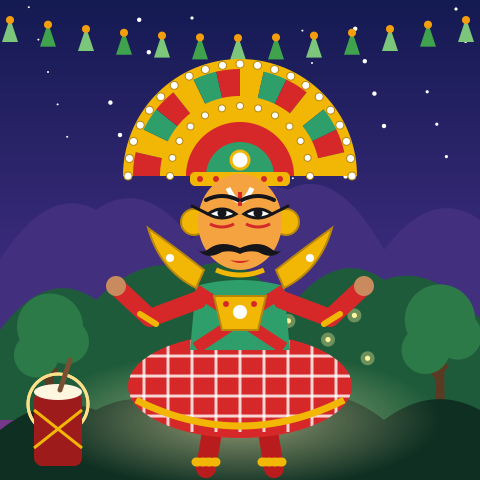
Yakshagana
ಯಕ್ಷಗಾನ · yakShagaana
Coastal Karnataka · Kannada
Yakshagana fills the fields of coastal Karnataka with music after the harvest. A lead singer, the Bhagavata, sings the story, the chande drum races, and actors in fan-shaped crowns leap and spin, and speak their own lines, made up on the spot.
Did you know?
• Its name means "song of the yakshas", the celestial beings of old tales.
• Unlike Kathakali, the actors speak: their dialogue is made up afresh each night.
• Troupes travel from village to village from about November to May, and plays run all night.
• There are two main styles: Tenkutittu in the south and Badagutittu in the north.
Words from the stage
ಹಾಡು
haaDu · song
ಕುಣಿತ
kuNita · dance
ಕಿರೀಟ
kireeTa · crown
ಕಥೆ
kathe · story
Maharashtra
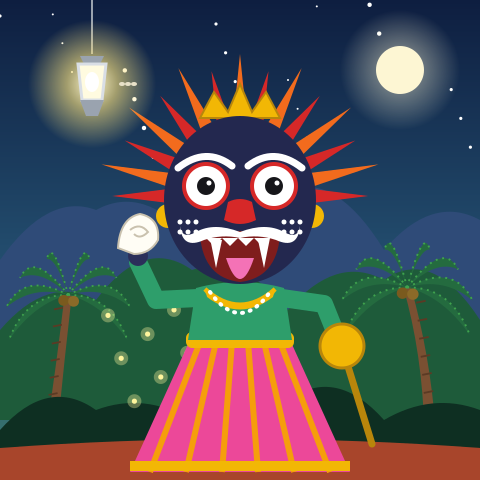
Dashavatar
दशावतार · dashaavataar
Konkan, Maharashtra and Goa · Marathi
In the Konkan villages of Sindhudurg and Goa, Dashavatar is played at temple fairs through the night. Its name means the ten avatars of Vishnu, and every night begins with Ganesha and Saraswati, then the comic demon Shankhasur, before the main story of the night.
Did you know?
• All the roles, women and goddesses too, are played by men of the troupe.
• The actors speak their lines on the spot, in Marathi and Malvani, often with jokes for the village.
• Shankhasur, the demon who steals the Vedas, is a favourite with children: loud, wild and funny.
• Shows were lit by hissing petromax lamps, and still play until dawn.
Words from the stage
दहा
dahaa · ten
अवतार
avataar · avatar
नाटक
naaTak · play
रात्र
raatra · night
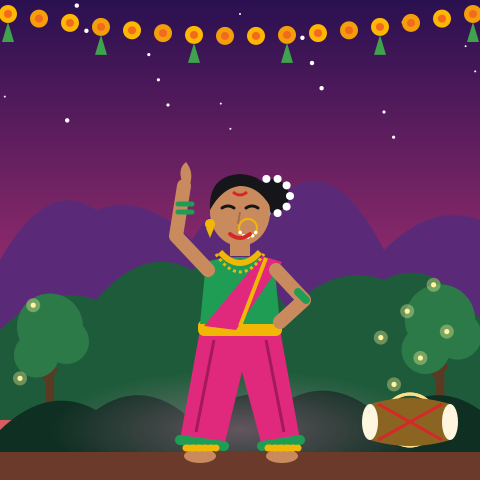
Lavani
लावणी · laavaNee
Maharashtra · Marathi
Lavani is Maharashtra's song and dance of joy and spirit, danced to the fast beat of the dholki drum. Dancers in nine-yard saris, with jasmine in their hair and bells at their ankles, sing of love, of everyday life and sometimes of politics, with a quick wit the audience loves.
Did you know?
• Its name is often traced to lavanya, beauty.
• It grew up in the travelling theatre of Tamasha, and in the courts of the Peshwas.
• The dancer wears a nauvari, a sari of nine yards, draped so that she can leap and turn.
• The ghungroo, strings of bells at the ankles, keep time with the drum.
Words from the stage
ढोलकी
Dholkee · drum
घुंगरू
ghungroo · ankle bells
नाच
naach · dance
गाणे
gaaNe · song
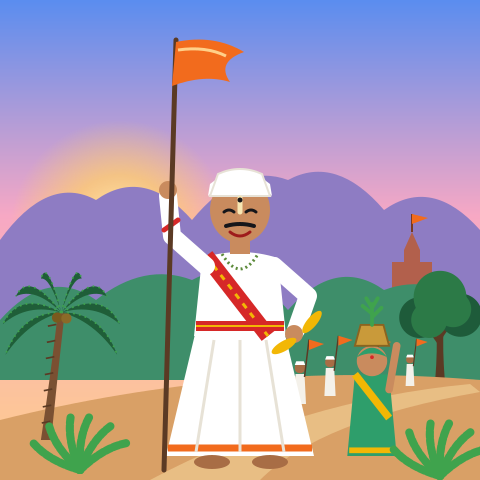
The Wari
वारी · vaaree
Maharashtra · Marathi
Every year in June and July, hundreds of thousands of Warkaris walk to the temple of Vitthal at Pandharpur, about 250 kilometres in some three weeks. Dressed in white, with saffron flags, cymbals and tulsi plants, they walk singing the abhangs of the saint-poets, and dance as they go.
Did you know?
• It is more than 700 years old, and walks behind the palanquins of the saints Dnyaneshwar and Tukaram.
• Pilgrims call each other mauli, mother, whoever they are: everyone on the Wari is equal.
• The pilgrims dance the ringan, a great circle, and the fugdi, spinning in pairs.
• Many women carry a tulsi plant in a brass pot on their head all the way.
Words from the stage
विठ्ठल
viThThal · Vitthal
पालखी
paalkhee · palanquin
अभंग
abhang · devotional song
टाळ
TaaL · cymbals
Pictures drawn for Vanico. Costumes are simplified; each art form has many more.
Take the stories home
These stages tell stories that families still tell at home. Read folk tales from Kerala, Karnataka and Maharashtra in our storybook, or learn the language of a stage you liked.


Learn to speak Marathi, Malayalam, Hindi, Kannada and Sanskrit with short daily listening and speaking lessons.
Vanico is in early access. Lessons are a starting set and will keep growing.
Version 1.31.0